I. Embracing the Airbnb Revolution: The Power of a Compelling Pitch Deck
One key factor that propelled Airbnb from a fledgling start-up to a global phenomenon is the strength and effectiveness of its investor pitch deck.
This game-changing document was a roadmap to the company’s phenomenal ascent from shared spaces and airbeds to a platform boasting over 6,000+ properties in 192 countries, with a whopping $38 billion valuation.
Understanding the vital role of a pitch deck and the key elements within it can significantly shape a startup’s trajectory.
From painting a vivid picture of market potential to articulating business models, our team at Brand Iron has used these same takeaways to persuade investors and stakeholders and help raise over $5 Billion in funding.
II. The Airbnb Pitch Deck Impact: An Overview
The Airbnb pitch deck revolutionized the way entrepreneurs approach pitching their startups.
Airbnb’s original pitch deck came to life at a critical time in the company’s history. Founders Brian Chesky, Joe Gebbia, and Nathan Blecharczyk were trying to introduce a novel idea – the concept of shared living spaces, breaking away from the norms of hotel accommodations. The pitch deck elegantly captured this unconventional idea, telling a story that resonated with its potential investors.
The pitch deck meticulously showcased Airbnb’s problem-solving strategy, tackling the existing issues in the travel industry head-on. It brilliantly illuminated the hardships of online travel booking clients and the discomforts of traditional hotel accommodations, offering a fresh, user-friendly solution: a shared economy platform for travelers and hosts alike.
This pitch deck was more than just a presentation; it was a story of struggle, resilience, and ultimate success. It was pivotal in securing initial funding of $600K from powerhouse venture capitalists Sequoia Capital and Y Ventures. This early success story is a testament to the power of a well-crafted pitch deck, and Airbnb’s original pitch deck remains a source of inspiration for entrepreneurs worldwide.
III. Deconstructing the Airbnb Pitch Deck
As you venture into the start-up world, studying successful precedents is crucial. One such example is the Airbnb pitch deck from 2009. This breakdown will take you through each slide, exploring its content, purpose, and effectiveness.
1. Cover Slide: The Basics
Airbnb kept it simple: their company name and a 7-word tagline precisely depicting their service, business model, and target audience.
Key takeaway: clarity and simplicity are essential.
Drop your company name on your cover slide and spice it up with a catchy tagline. This tiny line should be your business in a nutshell – think of it like your company’s handshake to potential investors. Remember, keep it snappy, clear, and packed with who you are and what you’re all about.
2. Problem Slide: Identifying The Market Need
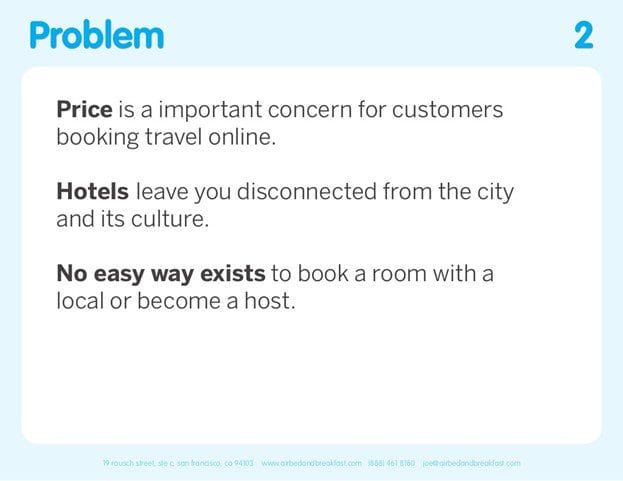
Airbnb nailed it with three direct statements that underlined the pricing problem with hotels, a cultural issue for leisure travelers, and a technology problem.
Key takeaway: pinpoint accuracy and relatability.
Your problem slide should be about the market needs your start-up is ready to tackle. You could do it with a trio of punchy lines that lay out your potential customers’ issues – the simpler and more relatable, the better. This is your chance to show how well you’ve got your finger on the pulse of the market’s needs and how you’re set to swoop in and save the day.
3. Solution Slide: Providing The Answer
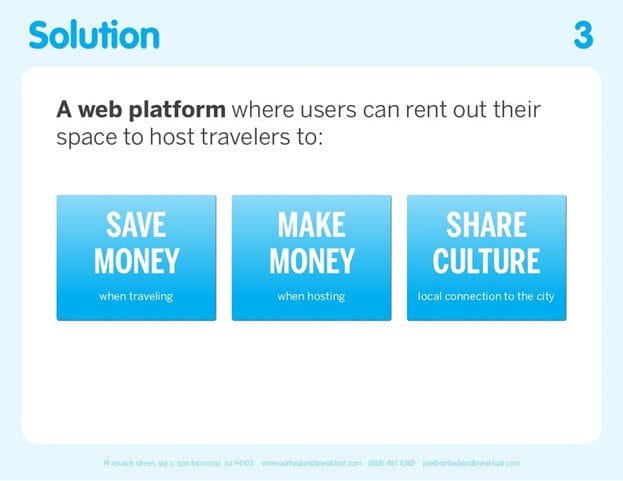
Airbnb hit the bullseye by putting forward three prime reasons customers would use their service. They weren’t selling features but delivering benefits like ‘Save Money when traveling.’
Key takeaway: less is more, and benefits beat features.
Alright, so you’ve laid out the problems – now it’s time to bring in the big guns: your solutions. This slide is all about your core value propositions, and the key here is to think of benefits, not features. Why would your customers want to use your service? What’s in it for them? Maybe it’s a way for them to save money, like Airbnb’s guests, or it’s about making life easier. Whatever it is, get it down to a neat set of reasons, keep it short and sweet, and ensure it resonates with your audience’s needs. It’s all about showing how you will change the game and improve the world for your customers.
4. Market Validation: Proof of Potential
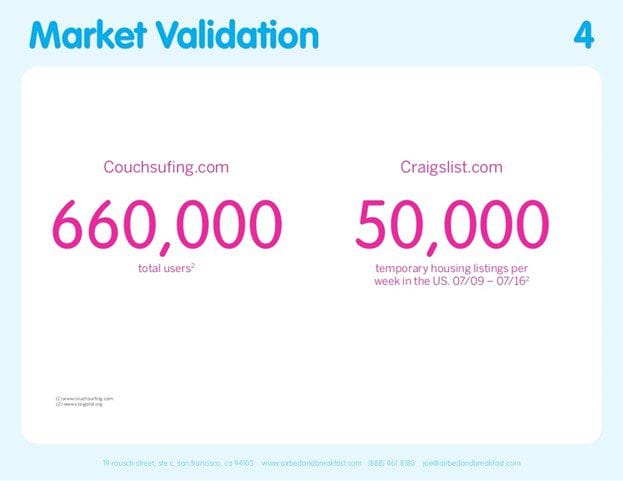
Airbnb smartly showed off its validation data, using big names like Craigslist and Couchsurfing as reference points. This gave their investors a clear picture of what the market was craving and how much potential was out there.
Key takeaway: validation is vital, and proof points pump up your pitch.
Now that you’ve clearly stated the problem and wowed them with your solution, it’s time to back it up with some cold, hard facts. This is where your market validation slide comes in, helping you prove to your investors that your idea isn’t just a pipe dream. You’ve done your homework, and there’s an actual demand for what you’re offering.
So how do you go about it? You could pull in some market references, just like Airbnb did with Craigslist and Couchsurfing. You could also include some hard data or statistics showing a growing market trend or demand. You may have some testimonials from satisfied customers or beta testers. Whatever you’ve got, lay it out here to show your investors that you’ve done your research, you know your market, and you’re ready to dive in and meet that demand head-on.
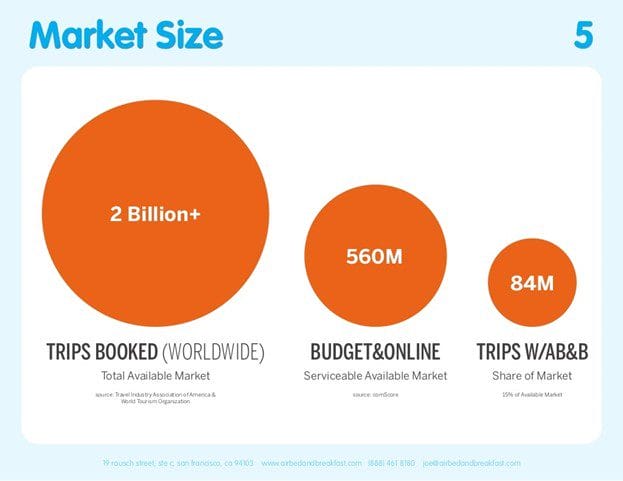
5. Market Size: Showcasing The Opportunity
Airbnb showcased the immense opportunity by bringing forth the two billion+ trips booked yearly – data from the Travel Industry Association.
Key takeaway: Bold, verifiable data creates excitement.
On your market size slide, highlight the massive opportunity your business is aiming for. Use substantial, credible numbers to illustrate the pie waiting to be divided. Be diligent, ensuring your data is robust and reliable since this slide is about sparking the ‘wow’ factor in your investors, showing them the tremendous potential of your venture.
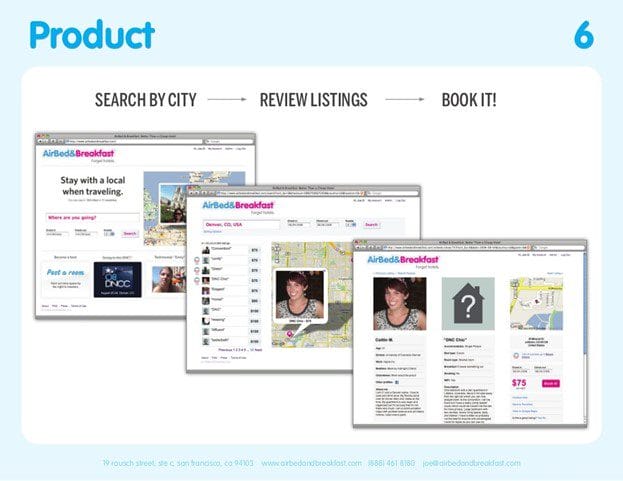
6. Product Slide: Displaying The Offering
Airbnb nailed it with their product slide – they spelled out their service in three easy steps, showcasing a super user-friendly interface.
Key takeaway: Simplicity rules.
In your product slide, clarity is the name of the game. Break down your product’s key function into the simplest terms possible. It’s like the first public debut of your product – clear, enticing, and easy to understand. It’s your chance to make your audience see the actual value of what you’re offering. So, make it count!
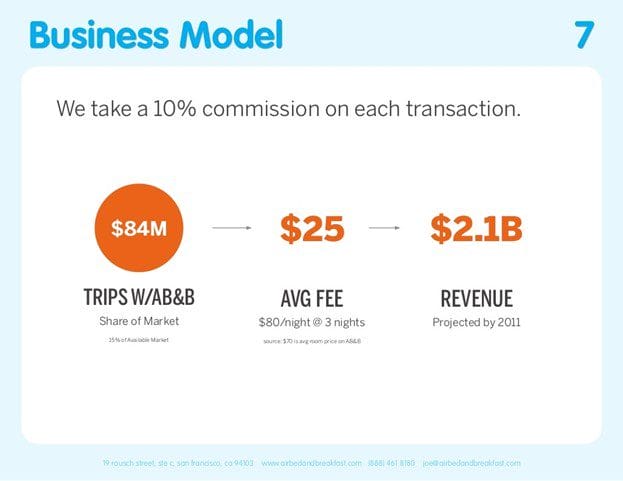
7. Business Model Slide: Understanding The Revenue
Airbnb nailed it with a simple one-liner, explaining they take a 10% cut from each transaction.
Key takeaway: Keep it straightforward.
On your business model slide, you’re talking money. Explain how you’ll make it, but keep it as straightforward as possible. Your business model might be intricate, but save the details for later. Here, you’re looking for an easy-to-digest one-liner that clearly shows where the revenue’s coming from.
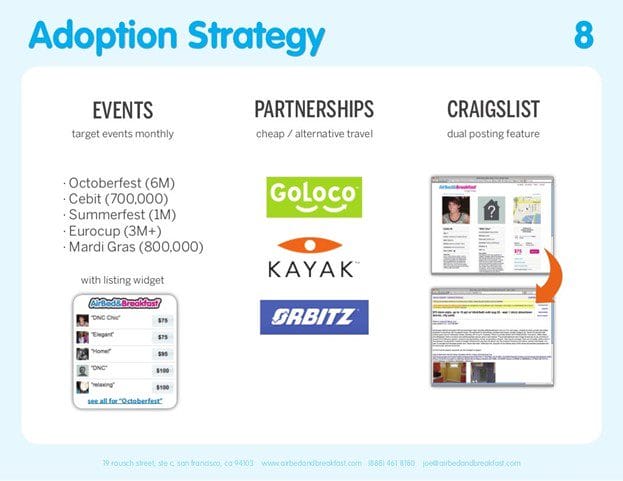
8. Adoption Strategy: Outlining The Growth Plan
Airbnb spotlighted their ‘dual posting feature,’ a unique and scalable way to attract more customers.
Key takeaway: Be creative and strategic.
In your adoption strategy slide, you’re laying out your game plan for winning customers. It’s your chance to shine with a unique and profitable approach that outclasses the competition. So, think outside the box and let your strategy be your beacon of growth!
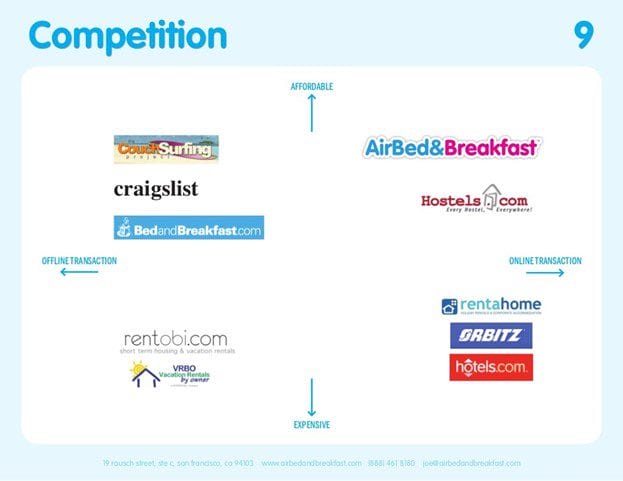
9. Competition Slide: Demonstrating The Market Position
The competition slide shows where you stand in the market. Airbnb’s deck strategically positioned them against competitors, illustrating their distinct market position.
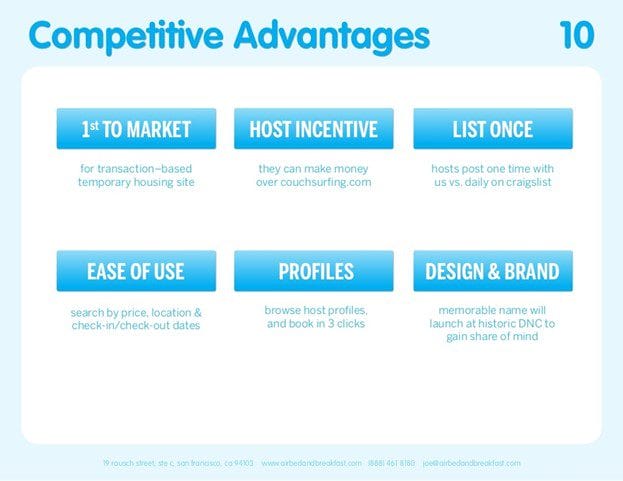
10. Competitive Advantages Slide: Highlighting The Edge
A competitive advantage slide highlights what sets you apart. Airbnb’s slide focused on unique features and services, giving them a competitive edge in the market.
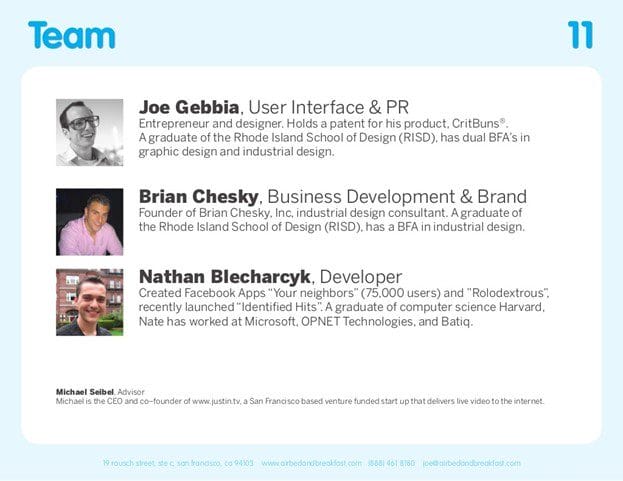
11. Team Slide: Introducing The Movers
The team slide introduces the individuals behind the venture. Airbnb emphasized the entrepreneurial achievements of its founders, showcasing their ability to drive the business forward.
Secure a Complimentary 20-min Pitch Deck Audit.
IV. Conclusion
Creating a compelling pitch deck is crucial for any startup. As you’ve seen from Airbnb’s pitch deck, clear communication, market understanding, and a well-defined business model can pave the way to success. Use these steps as a checklist when creating your pitch, and remember: a well-crafted pitch deck can be the difference between securing funding and missing your opportunity.
V. FAQs
What is the purpose of a pitch deck?
A pitch deck is a concise presentation entrepreneurs use to outline their business plans to potential investors. It provides an overview of the business, including the problem it solves, its unique value proposition, business model, market size, competitive landscape, and more. It’s the tool used to make a compelling case for investment.
How successful was the Airbnb pitch deck?
Airbnb’s pitch deck was immensely successful. It was used in 2009 to secure a $600K investment from Sequoia Capital and Y Ventures. Today, Airbnb is valued at over $20 billion, making its pitch deck a powerful tool that helped catapult the company to its current global success.
What elements made Airbnb's pitch deck stand out?
Airbnb’s pitch deck was clear and concise and powerfully demonstrated the company’s value proposition. Key elements included a compelling description of the problem, a clear solution, and a robust business model. One standout feature was the simplicity of their business model slide, which clearly stated, “We take a 10% commission on each transaction.”
What lessons can we learn from Airbnb's pitch deck?
Critical lessons from Airbnb’s pitch deck include the importance of clarity, simplicity, and a compelling value proposition. Also, a clear business model presentation and emphasizing experience over academic titles in the team slide are valuable takeaways. Furthermore, we learn the significance of validating your market and effectively projecting potential revenues.
How can you tailor Airbnb's pitch deck strategy to your startup?
You can tailor Airbnb’s pitch deck strategy by focusing on clarity and simplicity in your message. Clearly outline the problem, present a compelling solution, and highlight your unique value proposition. Define your business model succinctly and highlight your team’s achievements. Remember to validate your market and provide a realistic but optimistic projection of your startup’s growth potential.

CEO | Brand Champion
Michael Doyle has been changing the face of Brand Marketing for over two decades. He built a tech-based advertising agency, DNA Advertising, into a multi-million dollar company. Michael sold the company as part of a national IPO in 2000. Michael founded Brand Iron in 2002 and has since lent his expertise to hundreds of other businesses in dozens of industries around the world.