Infographics are a quick and fun way to summarize the facts and importance of what you are trying to share with your audience. Depending on what you are sharing, there are many different kinds of infographics that can be used to effectively and efficiently spread the intended message.
1. Statistical
If you are presenting a lot of data or statistics, an infographic is a great way for your audience to absorb and understand what the data is saying. Using charts and other visual data like percentages or graphics can transform a boring topic into a visually interesting piece of communication.
2. Informational
This infographic would include things like tips or tricks, or can act as a brief overview for a new or special topic. It helps you dive into new concepts without being overwhelming. This is where an infographic gets its name, from being able to share information graphically.
3. Comparison
When you want your audience to choose this or that and compare or contrast then this infographic is the way to go. Laying out the features of competitive products can show why your offerings are ideal and what the value offerings look like. Using contrasting colors and elements can help readers separate the two (or more) options being presented.
4. Timeline
This is important when you need to tell a story in a specific order. It can help you visualize historical events, important dates, or a project timeline. It can be easier for people to have a visual aid to understand and gain a sense of time when it comes to these projects.
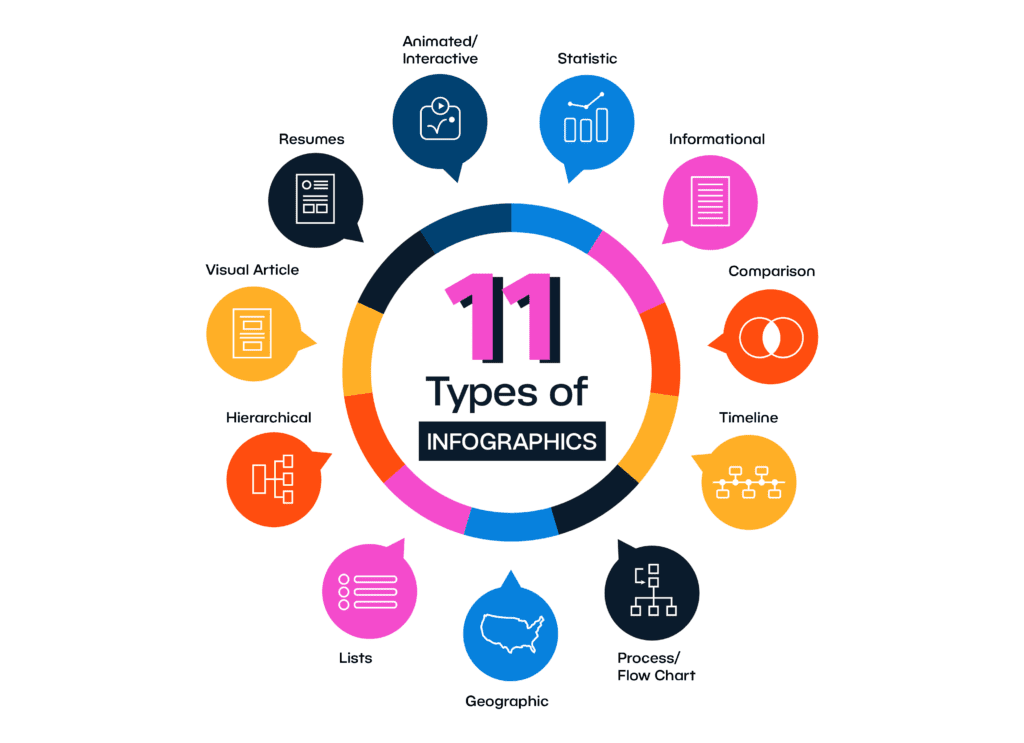
5. Process/Flow Chart
Helping provide your audience with a summary of a step-by-step process. Breaking down processes means that you are clarifying and simplify something important. For example, you might depict the steps your marketing team will take during a big project from concept creation to execution.
6. Geographic
Using location-based data can be great for certain marketing efforts. You can use an infographic to help show on a map where your customers are, where operations are happening, or what secondary geographical data you found to be helpful. Presenting this information visually can help your audience members better understand.
7. Lists
An infographic can bring life to a traditional or boring list. These are generally straightforward but can be easier to digest when it is visual. Having clear heading or numbers allows the reader to skim for what they are looking for or continue reading for a deeper understanding.
8. Hierarchical
This can be seen often when you need to organize something from top to bottom or greatest to least. This can be really helpful in marketing if you are trying to show what your companies organizational structure looks like. Usually, the CEO or President will be at the top of the hierarchy, and moving down the chain you will find people like vice presidents, managers, directors, and other lower-level employees.
9. Visual Article
Taking what normally would be written in paragraph format and eliminate all the extra fluff. Using pictures and showing a process can create a far more unique way to grab attention while still sharing useful information.
10. Resumes
Market yourself with an infographic. If recruiters spend an average of six seconds scanning resumes then it is important to quickly make your mark. Using elements like timelines, icons for skills and a simple layout can go a long way in making your resume stand out.
11. Animated/Interactive
Grab the attention of the audience with moving pieces or interactive elements so they can engage with your content. This kind of infographic works best on a creative, out-of-the-box audience who doesn’t want to just sit back and watch.
If you’re looking to level up your marketing content with infographics but don’t know where to start please reach out to our team of professionals! We will help you reach your marketing and branding goals and create the content you’ve been missing. Contact us today!

CEO | Brand Champion
Michael Doyle has been changing the face of Brand Marketing for over two decades. He built a tech-based advertising agency, DNA Advertising, into a multi-million dollar company. Michael sold the company as part of a national IPO in 2000. Michael founded Brand Iron in 2002 and has since lent his expertise to hundreds of other businesses in dozens of industries around the world.